
Japanese Vehicle Inspection (Shaken) Guide for Importers 2026
Learn everything about Japanese Vehicle Inspection (Shaken), Japan’s mandatory car inspection system for safety, emissions, and registration compliance. This complete guide explains Shaken cost, validity, inspection process, export impact, and why it matters for Japanese used car importers worldwide. Perfect for car dealers, auto import businesses, and international buyers sourcing vehicles from Japan.
 Vehicle
Understanding Japanese Vehicle Inspection (Shaken) – Complete Guide for Car Importers (2026)
If you are planning to import cars from Japan or purchase a Japanese used vehicle, understanding the Japanese Vehicle Inspection system is essential. Known as Shaken, this mandatory inspection ensures that vehicles meet Japan’s strict safety and environmental standards.
In this complete guide, we explain the Shaken inspection process, cost, validity period, export impact, and why it matters for car importers worldwide.
What is Shaken in Japan?
Shaken is Japan’s compulsory vehicle inspection and registration system. The term “Shaken” (車検) is short for Jidōsha Kensa Tōrokuseido, meaning automobile inspection and registration system.
Shaken ensures vehicles comply with:
- Road safety regulations
- Emission control standards
- Vehicle weight tax requirements
- Compulsory insurance coverage
- Legal registration validity
Without valid Shaken, a vehicle cannot legally operate on Japanese roads.
How Often is Shaken Required?
The inspection schedule in Japan is:
- New cars: First inspection after 3 years
- Used cars: Every 2 years
- Commercial vehicles: Every year
Because renewal can be expensive, many owners sell vehicles before the Shaken expiry, which is one reason why the Japanese used car export market is so strong globally.
What Does Japanese Vehicle Inspection Include?
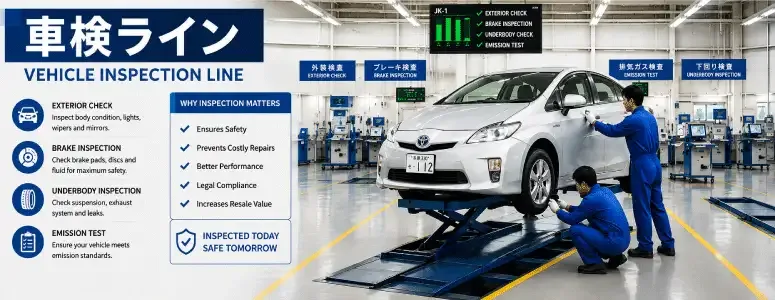
Japan has one of the strictest car inspection systems in the world. The Shaken process typically includes:
1. Safety Inspection
- Brake performance test
- Steering system check
- Suspension examination
- Tire condition review
- Headlights, indicators & electrical systems
2. Emissions Testing
Vehicles must meet Japan’s strict environmental standards. Emission levels are carefully measured to reduce pollution.
3. Structural & Modification Check
- Chassis number verification
- Body integrity inspection
- No unauthorized engine or exhaust modifications
4. Documentation & Legal Verification
- Road tax confirmation
- Compulsory automobile liability insurance (JCI)
- Registration certificate validation
Estimated Cost Breakdown:
- Inspection Fee: ¥20,000 – ¥50,000
- Vehicle Weight Tax: ¥10,000 – ¥50,000
- Compulsory Insurance (JCI): ¥20,000 – ¥30,000
- Service & Garage Charges: ¥10,000 – ¥40,000
💰 Total Average Cost: ¥70,000 – ¥150,000
Luxury vehicles, SUVs, or modified cars may cost more.



No comments yet. Be the first to comment!