
How to Read Japanese Auction Sheet Like a Pro | MDK Japan
Learn how to read a Japanese auction sheet like a professional. Understand auction grades, symbols, inspection reports, and avoid costly mistakes before importing a car.
 Buying Guide
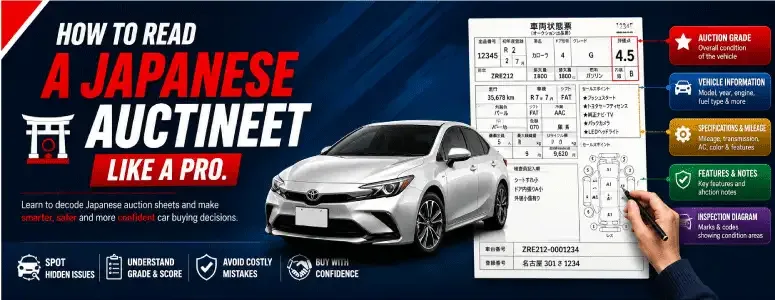
Buying a used Japanese car can save you thousands of dollars while giving you access to reliable, fuel-efficient, and well-maintained vehicles. However, before placing a bid or purchasing any vehicle, there's one document you must understand:
The Japanese Auction Sheet.
Many first-time buyers ignore this report, but professional importers rely on it because it reveals the true condition of the vehicle.
In this guide, you'll learn exactly how to read a Japanese auction sheet like a professional, understand auction grades, inspection notes, damage symbols, and avoid buying a problematic vehicle.
What is a Japanese Auction Sheet?
A Japanese Auction Sheet is an official inspection report prepared by professional inspectors at Japanese car auctions.
It includes:
- Vehicle condition
- Exterior damage
- Interior condition
- Engine information
- Mileage verification
- Accident history
- Repair records
- Overall auction grade
Think of it as the vehicle's health report.
Why is an Auction Sheet Important?
When importing a car from Japan, you usually cannot inspect the vehicle in person.
The auction sheet helps you:
✅ Verify original mileage
✅ Check accident history
✅ Understand vehicle condition
✅ Estimate repair costs
✅ Avoid hidden damage
Professional buyers never purchase a Japanese car without reviewing the auction sheet first.
Parts of a Japanese Auction Sheet:
1. Vehicle Information
This section contains:
- Make
- Model
- Year
- Engine size
- Transmission
- Chassis Number
- Fuel Type
- Color
- Mileage
Example:
Toyota Corolla Fielder
2022
1.5L Petrol
Automatic
42,000 KM
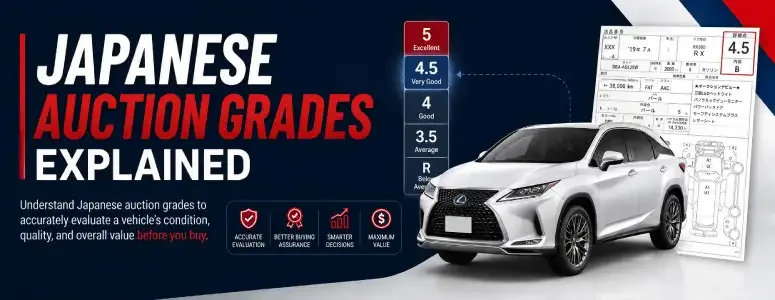
2. Auction Grade
The auction grade is the most important part.
Grade 6
Almost brand-new condition.
Grade 5
Excellent condition with very little wear.
Grade 4.5
Very clean vehicle.
Recommended for most buyers.
Grade 4
Good used condition.
Minor scratches expected.
Most exported Japanese cars fall into this category.
Grade 3.5
Average condition.
Some cosmetic repairs may be required.
Grade 3
Visible wear and repairs.
Suitable for budget buyers.
Grade 2
Heavy repairs or accident history.
Grade 1
Modified vehicle or significant changes.
Grade R / RA
Previously accident repaired.
These vehicles may still be good if repaired properly.
Interior Grades
Auction inspectors also grade the cabin.
A = Excellent
B = Very Good
C = Average
D = Poor
E = Requires major repair
Japanese Auction Symbols Explained:
One of the most confusing parts of the auction sheet is the vehicle diagram.
Inspectors use symbols instead of long descriptions.
Here are the most common ones.
Scratch Symbols:
A1 = Small Scratch
A2 = Medium Scratch
A3 = Large Scratch
Dent Symbols:
U1 = Small Dent
U2 = Medium Dent
U3 = Large Dent
Wave Marks:
W1:
Minor repaired panel.
W2:
Visible repair.
W3:
Poor quality repair.
Paint Marks
P = Paint issue
S = Rust
C = Corrosion
Panel Replacement
XX
Panel replaced.
Crack
X
Needs replacement.
Understanding Mileage Verification
Japanese auctions verify mileage carefully.
Look for:
✔ Genuine Mileage
✔ Service History
✔ Auction History
If mileage cannot be confirmed, it will usually be marked.
Avoid vehicles with suspicious mileage records.
Accident History:
Many buyers panic when they see Grade R.
This doesn't always mean the vehicle is bad.
A Grade R vehicle simply means:
- Structural repair completed
- Accident history recorded
- Passed auction inspection
Some Grade R vehicles are excellent value when repaired professionally.
Always ask your exporter to explain the repair details.
Inspector Comments:
Most auction sheets include handwritten Japanese comments.
These notes may mention:
- Oil leaks
- Engine noise
- Transmission condition
- Suspension issues
- Rust
- Water damage
- Previous repairs
Professional exporters translate these comments before purchase.
How MDK Japan Helps Buyers:
At MDK Japan, every customer receives complete auction support.
Our team provides:
✔ Verified auction sheets
✔ English translations
✔ Professional inspection advice
✔ Vehicle history verification
✔ High-resolution photos
✔ Export documentation
✔ Worldwide shipping
We help buyers understand every detail before making a purchase.
Tips Before Buying from Japanese Auctions:
Follow these simple tips:
- Choose Grade 4 or higher whenever possible.
- Check mileage carefully.
- Review all damage symbols.
- Read inspector comments.
- Verify service history.
- Buy through a trusted Japanese exporter.
- Never rely only on vehicle photos.
Frequently Asked Questions:
Can auction sheets be fake?
Yes. Some dishonest sellers create fake auction sheets. Always verify the auction sheet through a trusted exporter like MDK Japan.
Is Grade 4 good?
Yes.
Grade 4 is considered one of the best value-for-money grades and is highly recommended for most buyers.
Is Grade R safe?
Yes, if repairs were completed professionally and the vehicle passes inspection.
Can I translate Japanese auction sheets?
Yes.
MDK Japan provides English-translated auction sheets for customers before bidding or purchasing.
Final Thoughts:
Understanding a Japanese auction sheet is one of the smartest skills you can learn before importing a vehicle from Japan. By reading auction grades, damage symbols, inspector comments, and mileage records correctly, you can avoid costly mistakes and confidently choose a reliable vehicle.
Whether you're buying your first Japanese used car or importing vehicles for your dealership, always review the auction sheet carefully and work with a trusted exporter.
MDK Japan provides verified auction sheets, professional translations, and expert guidance to help customers worldwide buy quality Japanese vehicles with confidence.


No comments yet. Be the first to comment!