FBR Ruling on REEV Classification for Pakistan Imports
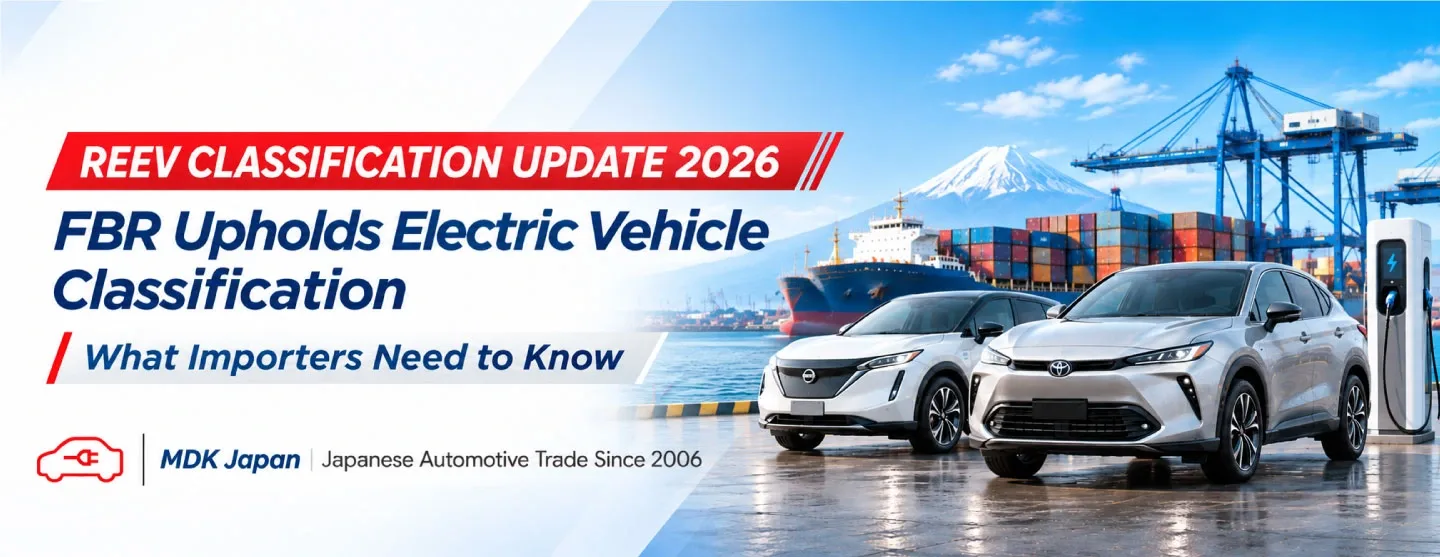
The FBR appellate decision dated 16 November 2026 confirms that Range-Extended Electric Vehicles (REEVs) fall under PCT Code 8703.8090 as Electric Vehicles. Learn what this ruling means for Chinese EV imports, customs classification, and REEV shipments held at Pakistani ports.
 Vehicle
FBR Ruling on REEV Classification for Pakistan Imports:
If you import electric or hybrid vehicles into Pakistan, or you’ve been waiting for a REEV shipment to clear at port, you need to understand the FBR ruling dated 16 November 2026.
The Federal Board of Revenue (FBR) Appellate Authority rejected an appeal filed by Indus Motor Company Limited and confirmed that Range-Extended Electric Vehicles (REEVs) fall under PCT Code 8703.8090, the category covering Electric Vehicles. This decision ends a classification debate that had created serious uncertainty across Pakistan’s automobile import sector.
But what actually led to this decision, and what does it mean for importers on a practical level? Let’s break it down.
Why Was Classifying REEVs So Complicated?
The dispute came down to one technical but commercially significant question: Is a Range-Extended Electric Vehicle a Hybrid Electric Vehicle, or an Electric Vehicle?
This isn’t just a matter of terminology. Under Pakistan’s import regulations, how a vehicle is classified directly determines its customs duty and tax treatment. That makes the answer extremely important for importers, dealers, and businesses bringing vehicles into the country.
At the center of this dispute were the Deepal S05 REEV and Frothing Friday REEV — two Chinese-manufactured models that are part of a growing wave of new EV arrivals in the Pakistani market.
Why Were REEVs Classified as Electric Vehicles?
To understand the FBR’s decision, it helps to understand how REEV technology actually works.
In a conventional hybrid vehicle, both the petrol engine and the electric motor can directly power the wheels. They work together as a combined drivetrain.
A REEV works very differently:
- The wheels are driven exclusively by the electric motor
- The petrol engine has no mechanical connection to the wheels
- The engine functions purely as an onboard generator
- That generator produces electricity to charge the battery, extending the vehicle’s driving range
- In simple terms, a REEV is essentially an electric vehicle with a built-in generator, not a hybrid in the traditional sense.
- The FBR recognized this technical distinction and upheld the Electric Vehicle classification under PCT 8703.8090.
So what does that mean for car importers?
This ruling isn’t just a legal technicality; it has real consequences for Pakistan’s automobile import industry.
1. Clarity on Customs Classification
Several REEV shipments had been placed on hold at Pakistani ports due to this classification dispute. With the FBR’s official position now confirmed, importers have a clear reference point for how these vehicles are treated under customs law.
2. A Clearer Path for Held Shipments
Shipments delayed specifically because of this classification issue may now be able to move forward through the customs process, provided all documentation and other requirements are in order.
3. Guidance for Future REEV Imports
This ruling also sets an important precedent for businesses planning to import technically similar Range-Extended Electric Vehicles in the future.
Will Vehicles Held at Port Be Released Now?
This is the question most importers are asking.
The honest answer: not automatically.
The FBR appellate order resolves the classification question; it does not trigger an automatic port release. Each shipment still needs to complete its own customs assessment, documentation review, and applicable duty and tax payments before it can be cleared.
Importers should not assume that all held REEV vehicles will be released immediately as a result of this ruling. The standard customs process still applies.
What Should Importers Do Next?
For anyone involved in electric vehicle imports or Chinese car imports into Pakistan, here are some practical steps worth taking:
Verify your vehicle’s specifications, and confirm whether your model technically qualifies as a REEV
Review your customs documentation; make sure everything is accurate, complete, and up to date
Understand the applicable duties; EV classification under PCT 8703.8090 carries specific duty and tax implications
Don’t confuse classification with clearance. Receiving a classification decision and having your shipment physically cleared are two separate stages of the import process.
Final Thoughts
The FBR appellate decision of November 16, 2026, provides much-needed clarity to Pakistan’s automobile import industry. By officially upholding the Electric Vehicle classification for REEV models, this decision removes a significant source of uncertainty that has been causing delays in shipments and complicating business decisions.
However, the actual impact of this ruling will depend on how customs officials manage the assessment and processing of the affected shipments in the coming weeks.
The FBR appellate decision of November 16, 2026, brings much-needed clarity to Pakistan’s automobile import industry. By officially maintaining the Electric Vehicle classification for REEV models, this decision eliminates a considerable source of uncertainty that has been delaying shipments and complicating business decisions.
However, the true impact of this decision will depend on how customs officials handle the assessment and processing of the affected shipments in the coming weeks.
Importing Japanese used cars or new Chinese electric vehicles (EVs) to Pakistan involves more than simply selecting the right models for your market; it also requires a solid understanding of the customs regulations that apply to your vehicles.
At MDK Japan, we believe that importers who are well-informed can make better business decisions. Having the right information protects your business, covering everything from customs classification to port procedures.

No comments yet. Be the first to comment!